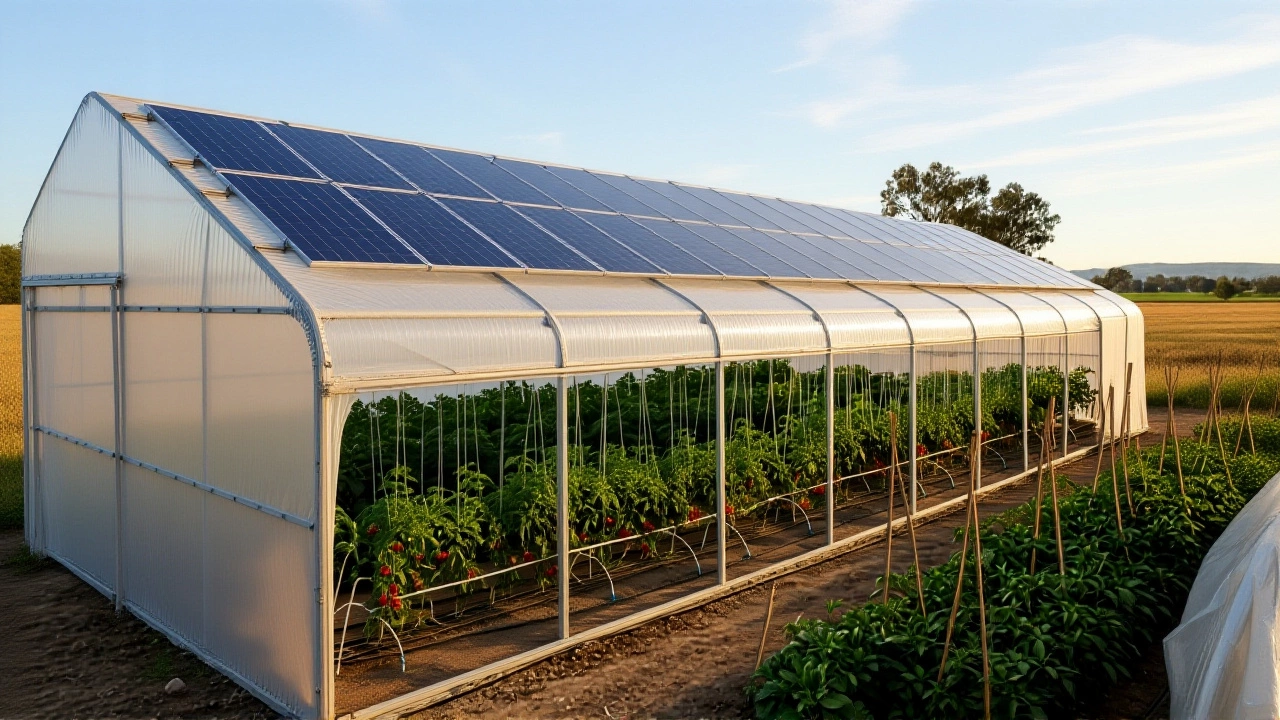
Here’s the twist that’s changing how we think about land use in India: growing crops under solar panels isn’t just possible—it’s reportedly doubling harvests. While most people assume solar farms mean barren ground, new data from local pilots suggests a symbiotic relationship between energy generation and agriculture. This shift comes as the country races toward net-zero emissions, creating an urgent need for more photovoltaic space without sacrificing food security.
The concept, known globally as agrivoltaics, is gaining traction here not just as an environmental ideal but as an economic necessity. With land becoming increasingly scarce and expensive, the idea of generating electricity and food on the same plot is moving from niche experiments to mainstream discussion. But it’s not all smooth sailing. The infrastructure required to make this work—specifically the structural integrity of the panels themselves—is facing scrutiny amid reports of cost-cutting measures by vendors.
The Agrivoltaics Boom: Doubling Yields?
Recent viral content circulating on platforms like YouTube highlights a striking claim: farmers who planted crops beneath elevated solar arrays saw their yields double. "The crop became double," translates the Hindi headline "सोलर पैनलों से नीचे उगने से फसल हो गई दोगुनी." While specific scientific studies backing this exact 100% increase are still emerging in public domain reports, the logic holds water. The partial shade provided by panels reduces evaporation, keeping soil moisture higher during scorching summers. This microclimate can be a lifeline for heat-sensitive crops.
However, experts caution that "doubling" depends heavily on the crop type and panel configuration. Leafy greens and certain vegetables thrive in partial shade, while sun-loving staples might suffer if the tilt and spacing aren’t optimized. The key is balance. As one industry observer noted, "As the world moves toward zero emission, we will need more space for photovoltaic systems in the coming time." That pressure is driving innovation in dual-use land models.
Installation Woes: The Cost-Cutting Trap
But wait—the promise of green energy is colliding with reality on the rooftops. Under the government’s PM Surya Ghar Muft Bijli Yojana, millions of households are installing solar panels. Yet, a disturbing trend has emerged. Homeowners report that many vendors are engaging in aggressive "cost-cutting" practices. One installer shared, "All the vendors who are doing installation under PM Surya Ghar scheme are cutting costs too much. Even at my place, cost-cutting was done by the vendor."
This isn’t just about saving a few rupees; it’s about safety. Cheap materials lead to weak structures. In high winds, poorly anchored panels can become dangerous projectiles. The technical details matter immensely here. A standard setup requires robust fastening into reinforced cement concrete (RCC) slabs, not just drilling into marble or tile layers which offer little grip. If the foundation fails, the entire investment—and potentially lives—are at risk.
Engineering Precision: Why Structure Matters
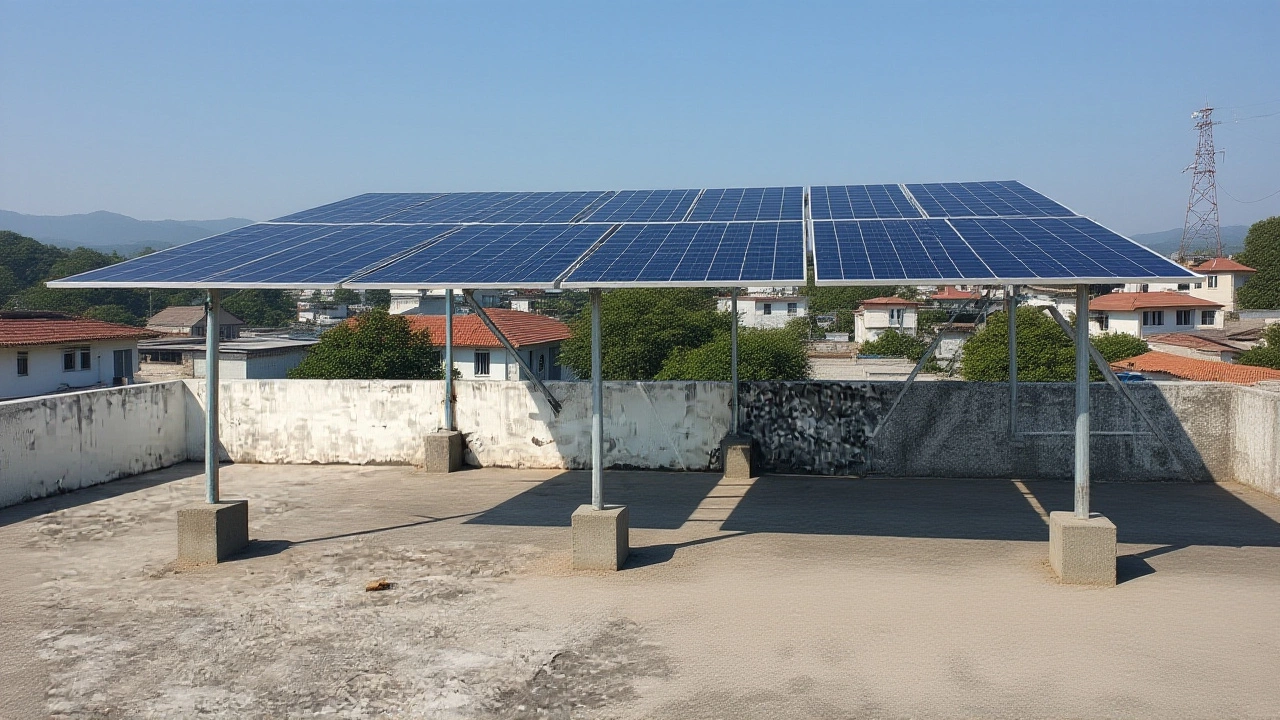
Turns out, building a reliable solar array is less about the panels and more about the steel beneath them. Technical videos detail the rigorous standards needed. For instance, using galvanized iron (GI) ready-made plates and welding low-iron plates ensures longevity against rust. The stand must be built with a "double leg" structure—one long back leg and one shorter front leg—to achieve the optimal tilt angle. Typically, this is set around 45 degrees, calibrated for summer sun positions to maximize energy capture when demand peaks.
For rooftop installations, the process is even more critical. If your roof has marble tiles, you can’t just screw into the stone. You must break through to the RCC slab below and anchor heavy-duty fasteners directly into the concrete. Using 8mm fasteners or 2-inch self-screw "gittis" is considered best practice. As one technician explained, "If the stand is tilted, there will be problems in the panel setup... the stand must be perfectly straight." Proper alignment also leaves room for inverters and future battery expansions, ensuring the system remains functional and safe for decades.
Case Study: The 7.5kW System
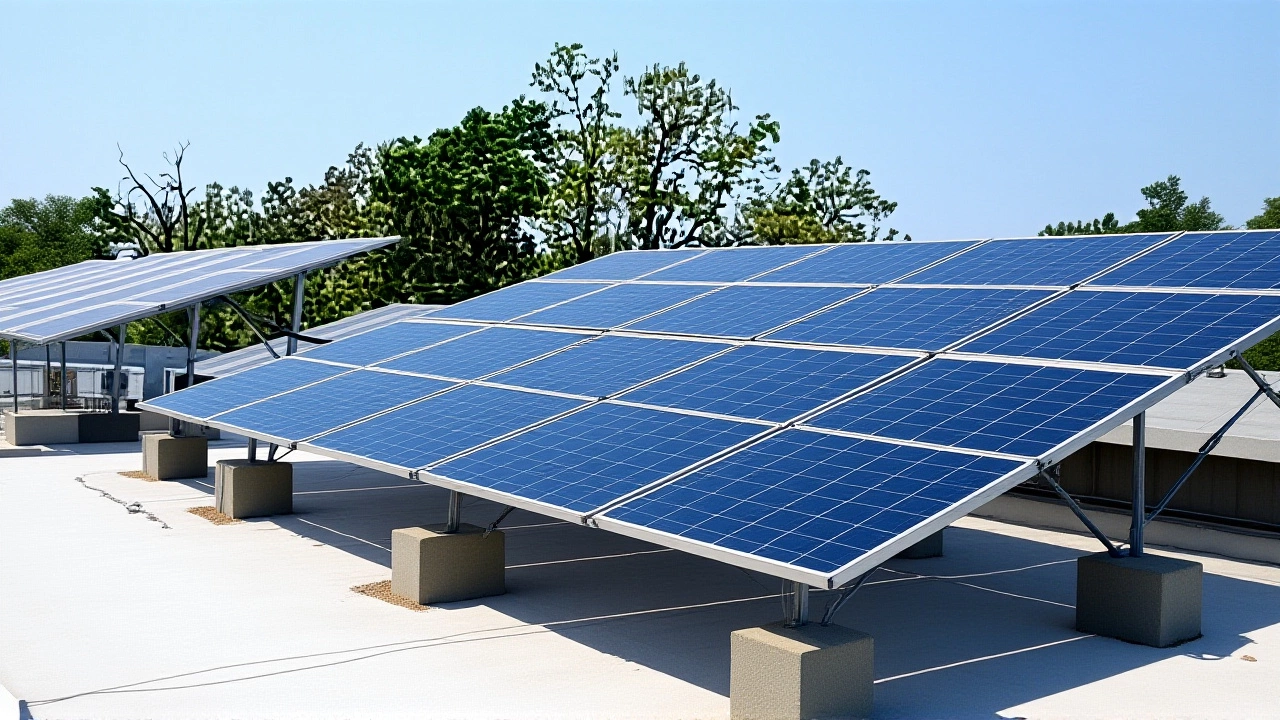
To see this in action, look at a typical residential setup: a 7.5 kilowatt system installed by brands like Loom Solar. These systems often use a "four rack" configuration, where four panels are mounted on a single sturdy frame. This multi-panel combination creates a unified structure that is tightened securely to prevent shifting. The precision required—from marking the position on the roof to calculating the angle—highlights why professional installation is non-negotiable. A crooked stand doesn’t just look bad; it reduces efficiency and increases wind load stress.
What’s Next for Solar Agriculture?
The intersection of energy and agriculture is poised for rapid growth. As urban sprawl consumes farmland, agrivoltaics offers a sustainable alternative. However, scaling this model requires strict regulatory oversight to prevent the kind of cost-cutting seen in residential rooftop projects. Farmers need access to subsidized, high-quality mounting structures designed specifically for agricultural environments—not repurposed residential kits.
In the background, the push for net-zero emissions continues to accelerate. By 2030, India aims to significantly expand its renewable capacity. Whether that expansion happens on barren desert land or atop thriving vegetable patches will depend on how well we integrate these two worlds. The technology exists. The economic incentive is clear. Now, we need the execution to match the ambition.
Frequently Asked Questions
Does growing crops under solar panels really double the yield?
While some anecdotal evidence and pilot programs suggest yields can double for specific shade-tolerant crops like leafy greens, results vary widely. The shade reduces water evaporation, lowering irrigation needs and protecting plants from extreme heat. However, for sun-intensive crops, yields may decrease if panel density is too high. It depends entirely on crop selection and panel spacing.
What is the PM Surya Ghar Yojana?
It is a central government scheme aimed at providing free electricity to households through rooftop solar installations. The program subsidizes the cost of solar panels and equipment for eligible homes. However, recent reports indicate issues with vendors cutting corners on installation quality to maximize profits under the subsidy framework.
Why is anchoring solar panels into RCC important?
Marble or tile roofs have weak underlying cement layers that cannot withstand high wind loads. Anchoring fasteners directly into the Reinforced Cement Concrete (RCC) slab ensures the structure remains stable during storms. Failure to do so can result in panels being ripped off, causing property damage or injury. Heavy-duty fasteners like 8mm bolts or 2-inch screws are recommended.
What is the ideal tilt angle for solar panels in India?
A tilt angle of approximately 45 degrees is often cited as optimal for summer performance, maximizing energy capture when sunlight is most intense and demand is highest. This angle helps reduce dust accumulation and allows rain to wash the panels naturally. However, the exact angle should be calculated based on the specific latitude of the installation site.
How does agrivoltaics help with water conservation?
Solar panels provide partial shade, which significantly reduces soil temperature and evaporation rates. This means crops require less frequent irrigation, conserving precious water resources. In arid regions, this dual benefit of energy generation and water savings makes agrivoltaics a highly efficient land-use strategy compared to traditional farming or standalone solar farms.