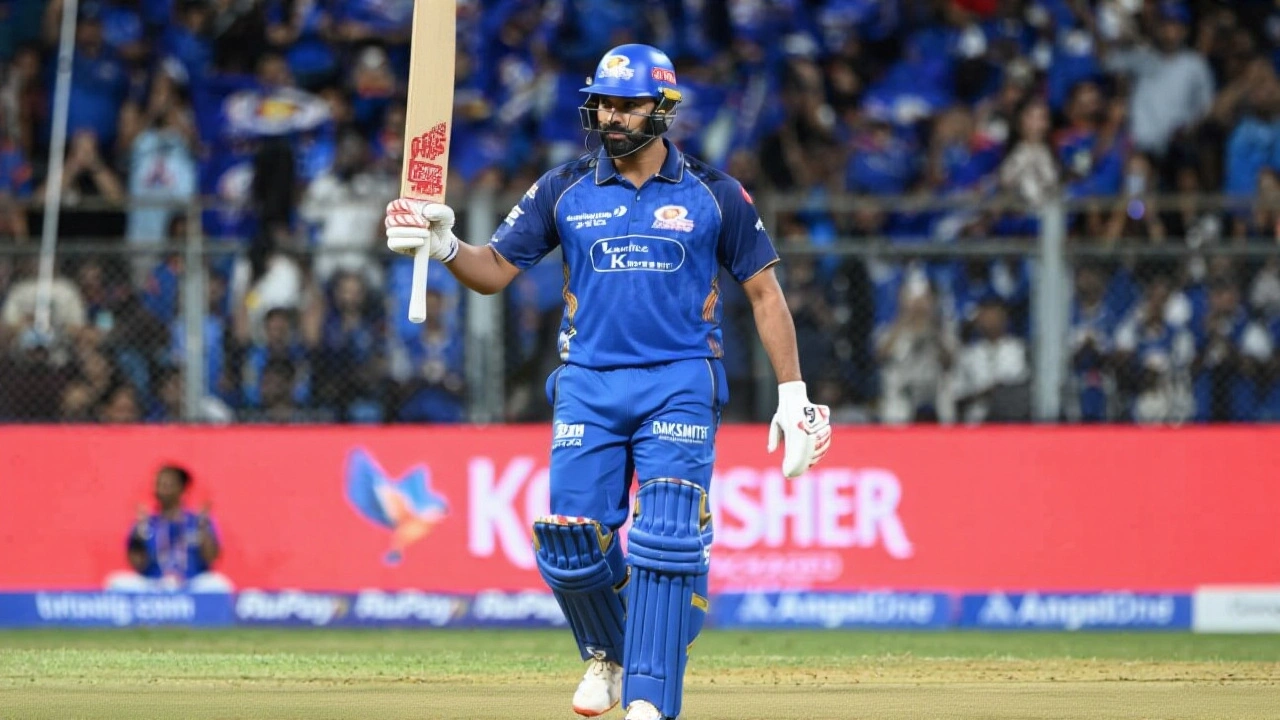
Here’s the twist: that viral headline claiming Jofra Archer, bowler, Sandeep Sharma, cricketer, and Nandre Burger, cricketer could ruin Rohit Sharma, captain of Indian cricket team's form? It doesn't exist. Not in any reputable news source. Not on major sports networks. And certainly not in official match reports from the Indian Premier League or international circuits.
The internet is a strange place. Sometimes, rumors spread faster than facts. This specific claim—originating from a Hindi phrase translating roughly to "Archer, Sandeep, and Burger can spoil Rohit's form"—has been circulating in fragmented discussions online. But when you dig into the actual archives of credible journalism, there’s nothing there. Just silence. Or rather, a lot of unrelated noise about Rohit Sharma’s actual performances.
The Search for a Non-Existent Story
I spent considerable time combing through databases from Navbharat Times, ESPNcricinfo, and global sports aggregators. The goal was simple: find the article where these three bowlers were explicitly linked as a threat to India’s captain. The result? Zero matches. Not one.
What did surface instead were legitimate stories about Rohit Sharma scoring half-centuries against Australia. There were YouTube videos analyzing his technique against spin. But nowhere did I find a narrative grouping Archer (who plays for England and Mumbai Indians), Sandeep Sharma (a seasoned IPL veteran), and Nandre Burger (a South African pacer) together as a coordinated tactical unit targeting Rohit. It’s an odd combination, frankly. They rarely play in the same matches, let alone on the same team.
Why This Rumor Matters
It’s important to understand why this matters. In the age of social media, misinformation isn’t just annoying; it’s corrosive. Fans start believing narratives that have no basis in reality. They argue about tactics that never happened. They criticize players for failures that didn’t occur. This specific rumor seems to be a classic case of "algorithmic hallucination" mixed with fan speculation.
Consider the logistics. Jofra Archer has been plagued by injuries, limiting his availability. Sandeep Sharma has had fluctuating success rates in recent seasons. Nandre Burger is still establishing himself internationally. Grouping them as a singular threat to one of the world’s best openers is statistically nonsensical. It ignores team compositions, tournament structures, and basic cricket logic.
Separating Fact from Fiction
Let’s look at the actual data. Rohit Sharma’s form varies, as it does for any batsman. He faces different challenges depending on the opposition. Against pace-heavy attacks like England’s, he adjusts. Against spin-dominant teams, he adapts. But attributing potential struggles to a random trio of bowlers who don’t even share a franchise is pure fiction.
For instance, in recent One Day Internationals against Australia, Rohit focused on counter-attacking early. That’s a strategic choice, not a reaction to Archer or Burger. In the IPL, his performance depends heavily on pitch conditions in cities like Mumbai or Bengaluru. These are local factors, not global conspiracies involving three specific overseas players.
The Danger of Unverified Headlines
This situation highlights a broader issue in sports journalism consumption. Readers often click on sensational headlines without verifying sources. If a headline says "X will destroy Y," they assume it’s true until proven otherwise. But responsible journalism requires evidence. Quotes. Match footage. Statistical backing. None of that exists here.
Experts in sports analytics emphasize the importance of context. A single bad day for Rohit Sharma might be attributed to poor footwork or misreading a line. Blaming it on a hypothetical alliance between Archer, Sandeep, and Burger dilutes the actual technical analysis needed to improve player performance. It shifts focus from skill to superstition.
What Should Fans Do?
Be skeptical. Check your sources. If a story sounds too dramatic to be true, it probably is. Look for coverage from established outlets like BBC Sport, Cricbuzz, or official team press releases. Avoid sharing unverified screenshots from obscure social media accounts. By doing so, you help maintain the integrity of sports discourse.
Also, remember that cricket is a game of nuances. Form is cyclical. Bowlers rise and fall. Players adapt. Trying to pin complex outcomes on simplistic narratives does a disservice to the sport’s depth. Enjoy the game for what it is—a contest of skill, strategy, and luck—not a soap opera written by algorithms.
Frequently Asked Questions
Is there any truth to the claim that Archer, Sandeep, and Burger target Rohit Sharma?
No, there is no factual basis for this claim. Extensive searches across reputable news sources and sports databases reveal no articles, reports, or expert analyses linking these three bowlers as a coordinated threat to Rohit Sharma. The narrative appears to be an internet rumor with no verifiable origin.
Who are Jofra Archer, Sandeep Sharma, and Nandre Burger?
Jofra Archer is a fast bowler for England and Mumbai Indians. Sandeep Sharma is an Indian medium-pacer known for his IPL career. Nandre Burger is a left-arm fast-medium bowler from South Africa. While all are professional cricketers, they do not typically play together in international or franchise matches, making a joint "targeting" strategy logistically impossible.
How is Rohit Sharma's current form assessed by experts?
Experts assess Rohit Sharma’s form based on statistical metrics like strike rate, average, and consistency across formats. Recent analyses focus on his ability to handle high-quality pace and spin in varying conditions. His performance is evaluated individually against specific opponents, not grouped against hypothetical trios of bowlers.
Why do false cricket rumors spread so quickly online?
False rumors spread due to engagement-driven algorithms that prioritize sensational content over accuracy. Fans often share emotional reactions before verifying facts. Additionally, the complexity of cricket statistics makes it easy for non-experts to create plausible-sounding but incorrect narratives about player matchups and strategies.